
What Does “Hormita” Mean?
If you’ve come across the word hormita and wondered what it means, the answer is charmingly simple: it’s a Spanish diminutive of hormiga, the word for “ant.” Add the suffix “-ita,” and you get “little ant” — a term that carries the same warmth and affection Spanish speakers use for anything small, familiar, or endearing.
But hormita isn’t just a cute nickname. It’s a doorway into one of the most astonishing groups of creatures on the planet. Ants may be tiny, but their colonies function like miniature societies — complete with division of labor, communication systems, and engineering feats that rival human infrastructure. This guide explores where the word comes from, what makes ants so remarkable, and why these “little ants” deserve a closer look.
The Linguistic Roots of Hormita
In Spanish, diminutive suffixes like “-ito” and “-ita” do more than indicate size — they express fondness. Calling something a hormita rather than a hormiga softens the word, turning a plain insect into something almost affectionate, the way “doggie” feels warmer than “dog” in English. This linguistic pattern is common across Spanish-speaking regions and shows up in everyday conversation, children’s stories, and folk expressions about hard work and persistence — qualities ants are famously known for.
The Biology of Ants
Ants belong to the family Formicidae, and scientists have identified more than 12,000 species worldwide, with estimates suggesting thousands more remain undiscovered. Despite their small size, ants are found on every continent except Antarctica, thriving in rainforests, deserts, grasslands, and even inside city sidewalks.
Anatomy Built for Survival
An ant’s body is divided into three main parts: the head, thorax, and abdomen. Their strength is legendary — many species can carry objects many times their own body weight, thanks to powerful mandibles and a lightweight exoskeleton. This strength-to-size ratio is one reason ants are often studied by engineers and roboticists looking to replicate efficient movement in small machines.
Species Diversity
Not all ants look or behave alike. Leafcutter ants slice through vegetation to farm fungus underground. Fire ants deliver a painful sting and build large mound colonies. Carpenter ants tunnel through wood, while army ants forgo permanent nests entirely, moving in massive foraging swarms. Each species has adapted uniquely to its environment.
Ant Colony Life: A Society Within a Society
What makes ants especially fascinating isn’t just the individual insect — it’s the colony as a whole.
The Queen’s Role
Every colony centers around one or more queens, whose primary job is reproduction. A queen can live for years, sometimes over a decade, laying eggs continuously to sustain the colony’s population.
Worker Ants and Division of Labor
Worker ants — all female — handle everything else: foraging, nest building, defending the colony, and caring for larvae. Some colonies even have specialized roles, such as soldier ants built for defense or nurse ants dedicated to tending the young.
How Ants Communicate
Ants “talk” to each other primarily through pheromones — chemical signals that mark trails to food, warn of danger, or identify colony members. This is why ants often appear to walk in an eerily coordinated line: they’re literally following a scent trail laid down by their nestmates.
Why Ants Matter to the Ecosystem
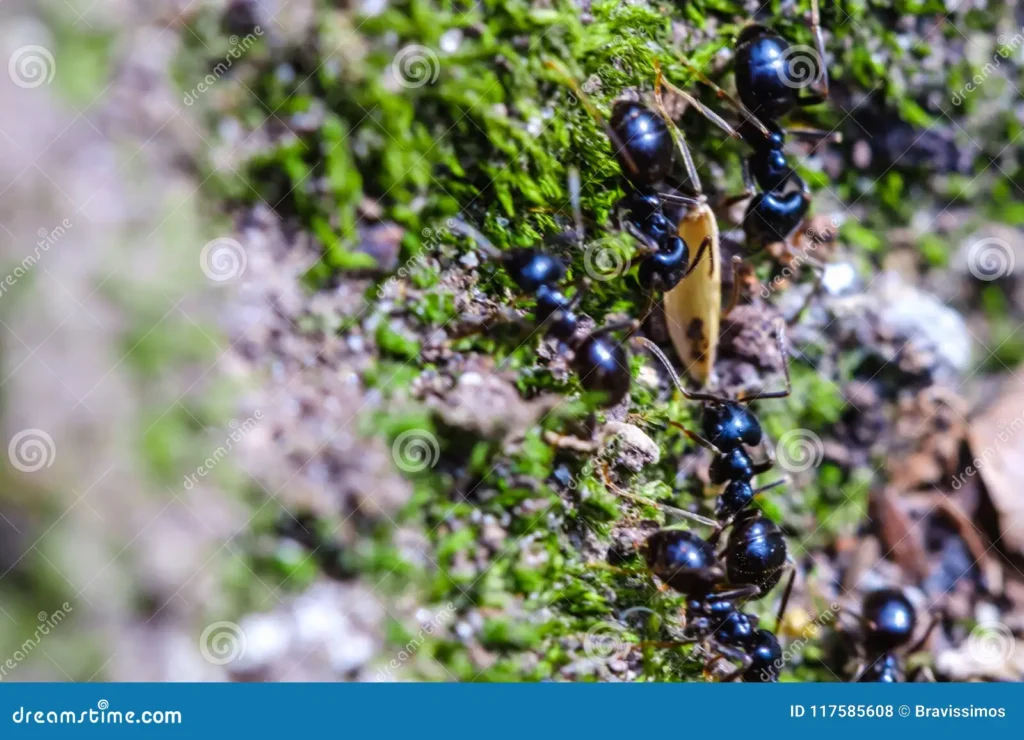
Ants play a bigger ecological role than most people realize. As you can see in the image above, ants like leafcutters actively shape their environment.
- Soil aeration: Their tunneling loosens and aerates soil, improving water drainage and root growth for plants.
- Seed dispersal: Many plant species rely on ants to carry seeds to new locations, a process called myrmecochory.
- Pest control: Ants prey on other insects, helping keep populations of potential pests in check.
- Decomposition: Some species help break down organic material, recycling nutrients back into the soil.
Without ants, many ecosystems would struggle to function as efficiently as they do.
Hormita in Culture and Everyday Language
Beyond biology, ants — and the affectionate term hormita — show up frequently in language and storytelling. Ants symbolize diligence, teamwork, and patience across many cultures, most famously in Aesop’s fable of the ant and the grasshopper. In Spanish-speaking households, calling a hardworking or persistent person a “hormiguita” (a related diminutive) is a common compliment, praising their tireless effort.
Dealing with Ants at Home
While ants are ecologically valuable outdoors, they’re less welcome indoors. If you’re noticing ants in your home, a few practical steps can help:
- Identify the entry point. Ants often follow consistent trails — trace them back to a crack, gap, or opening.
- Eliminate food sources. Store food in sealed containers and clean up crumbs and spills promptly.
- Use natural deterrents. Vinegar, cinnamon, and citrus peels can disrupt ant scent trails without harsh chemicals.
- Seal entry points. Caulk cracks around windows, doors, and foundations to block access.
- Call a professional if needed. Large infestations, especially of species like carpenter ants, may require pest control expertise to avoid structural damage.
Final Thoughts
What starts as a simple question — what does hormita mean? — opens up into a much bigger story about language, biology, and the surprisingly complex lives of ants. Whether you’re drawn to the word for its linguistic charm or curious about the tiny creatures behind it, one thing is clear: the humble hormita is anything but ordinary. From engineering underground cities to shaping entire ecosystems, ants prove that big impact often comes in small packages.
Further reading: