
What Is Wikipedia? A Simple Guide to the World’s Biggest Encyclopedia
Quick question, honestly. When was the last time you had a random question, “wait, when did that actually happen,” and didn’t just type it straight into Wikipedia? Can’t remember, can you? Neither can I.
It’s become that automatic. Let’s actually unpack what this thing is, though, properly, not just as background noise in your browsing habits.
What Is Wikipedia, Exactly?
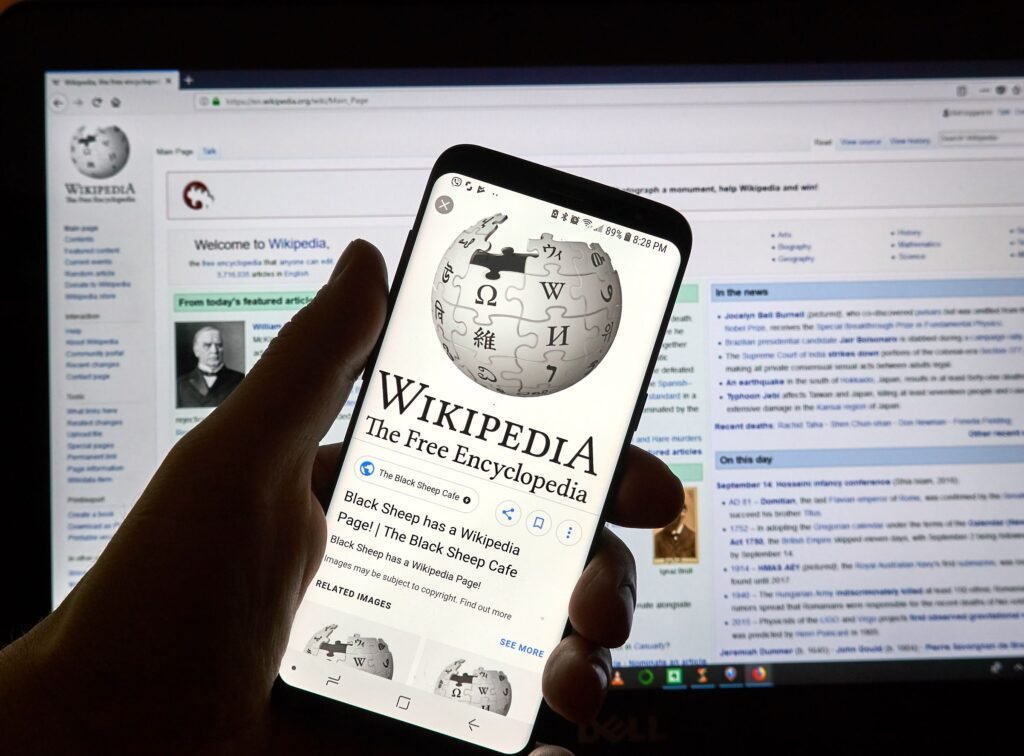
Wikipedia is a free, online encyclopedia, written and edited collaboratively by volunteers all over the world. Anyone, genuinely anyone with an internet connection, can create or edit an article. No formal qualifications required, no editorial board approving every change before it goes live. You can see this for yourself on the live homepage, which links out to all 300-plus language editions.
That sounds a bit chaotic on paper, doesn’t it? And honestly, sometimes it is. But it’s also exactly why Wikipedia grew as fast and as large as it did. Britannica’s own entry on Wikipedia actually does a decent job explaining the open-source model, if you want a second, independent take.
It’s run by the Wikimedia Foundation, a nonprofit organisation, which matters more than people realise. <cite index=”91-1,91-2″>Wikipedia is built by nearly 250,000 volunteers from all kinds of backgrounds, editing articles, checking facts, fixing code, and helping improve the internet’s knowledge.</cite> Nobody’s getting paid to write that article about, say, obscure 1970s Soviet volleyball players. They’re doing it because they genuinely care.
Where Did It Actually Come From?
Wikipedia turned 25 in January 2026, which, honestly, is a strange thing to sit with. Feels both ancient and somehow still new at the same time. The Wikimedia Foundation actually marked the anniversary properly, with founder Jimmy Wales reflecting on just how uncertain the whole project felt in the early days.
<cite index=”87-1″>It launched on 15 January 2001, when its two founders, Jimmy Wales and Larry Sanger, uploaded the very first page.</cite> Before that, though, there was an earlier attempt called Nupedia, a much slower, more formal project relying on expert-reviewed articles. <cite index=”82-1,82-2″>Nupedia used highly qualified volunteers to write content, but the process was painfully slow, only 12 articles got finished in the entire first year.</cite> Wikipedia’s own history page goes into a lot more depth here, if you’re curious about the earliest edits specifically.
Wikipedia started as basically a side experiment, a faster, looser way to draft content before it got polished for Nupedia. Except it grew so quickly it swallowed the parent project whole. <cite index=”98-2″>Within a month it had 1,000 articles. By the end of its first year, 20,000. By year two, 100,000, just in the English edition alone.</cite> Larry Sanger has actually written candidly about those early days himself, including a fairly critical reflection on how the project has changed since.
I think that says something honestly fascinating about how people behave when you remove the gatekeeping. Give people an easy, low-friction way to contribute, and momentum builds fast. Jimmy Wales’ own background is worth a look too, Britannica’s biography of him covers how he went from an early love of encyclopedias to actually building one.
How Big Has It Actually Gotten?
Genuinely massive at this point, in a way that’s hard to picture properly. <cite index=”91-3″>Wikipedia now has over 67 million articles across more than 300 languages.</cite> You can browse the full list of language editions directly on the Wikipedia homepage.
<cite index=”85-1″>The English edition alone has grown to over 7.1 million articles.</cite> Just sit with that number for a second. Seven million. Written by volunteers. For free. There’s even a dedicated Wikipedia article tracking Wikipedia’s own history, which feels like a fittingly recursive way to check the numbers.
It’s also, genuinely, one of the most visited sites on the entire internet. <cite index=”91-4″>In fact, Wikipedia is the only website among the top 10 most visited that’s hosted by a nonprofit organisation, not a corporation.</cite> Everything else in that top tier is running on ad revenue or subscriptions. Wikipedia’s just… not. That’s a genuinely unusual thing for a website this size, honestly, and the Wikimedia Foundation’s homepage explains a bit about how it’s funded almost entirely through donations instead.
How Does Editing Actually Work?
Here’s the bit that trips people up the most, I think. Anyone can edit an article. Genuinely, right now, you could go click “edit” on almost any Wikipedia page and change something.
So how does it not just collapse into chaos and misinformation constantly? A few mechanisms, honestly, working together.
Trusted, experienced editors can earn administrator privileges, giving them the ability to fix vandalism quickly, protect frequently-targeted pages, and resolve editing disputes. Every article also has a “Talk” page behind the scenes, where editors argue, discuss, and hash out disagreements about content, sometimes for genuinely absurd lengths of time over surprisingly small details.
There’s also a strong cultural expectation around neutrality, articles are supposed to present information fairly, without pushing one particular viewpoint. It doesn’t always work perfectly, controversial topics especially can get messy, with long-running disputes that never fully resolve. But the mechanism’s there, and honestly, it catches far more than people expect.
Can You Actually Trust Wikipedia?
Honestly, this is the question that matters most, and the answer’s a bit nuanced.
For established, well-documented topics, historical events, scientific concepts, well-known public figures, Wikipedia’s generally remarkably solid. Errors do slip through, sure, but they tend to get caught and corrected relatively fast, especially on heavily-watched pages. Quora actually has a decent thread breaking down who really built the site, worth a skim if you want other people’s take on the founding story too.
Where it gets shakier: brand new events, still unfolding, where facts are genuinely uncertain yet. Fringe or niche topics with fewer editors watching closely. And, controversial subjects, where competing viewpoints can genuinely spill into prolonged editing disputes.
My honest take, and this is genuinely how I use it myself: Wikipedia’s a fantastic starting point. Great for getting orientated on a topic fast, understanding the basic shape of something before digging deeper. For anything you’re citing formally, in an essay, a report, something serious, though, I’d always follow the citations at the bottom of the article back to the original sources. Wikipedia even encourages that itself, honestly, most articles are built almost entirely from footnoted references.
Why Does It Still Matter So Much?
I think in an era increasingly full of AI-generated content, sponsored posts dressed up as articles, and outright misinformation, Wikipedia’s volunteer-driven, ad-free model feels almost old-fashioned in a good way.
Nobody’s trying to sell you anything on a Wikipedia page. Nobody’s optimising the article to keep you scrolling longer. It’s just people, largely anonymous, contributing because they genuinely want accurate information to exist somewhere accessible. There’s a genuinely lovely oral history piece, An Oral History of Wikipedia, that captures this spirit well if you want the human side of the story.
That’s honestly a bit rare online these days, and worth appreciating, even if the site’s far from perfect.